

Finding An Adviser Who Can See Your Vision is Like Finding A Needle in the Haystack

Translating between investor and entrepreneur is one of our unique skills at Doescher Group
At Doescher Group, one of our unique skills is translating between investor and entrepreneur. We call it being bilingual. Entrepreneurial business owners are just fundamentally different. What excites them can easily scare off an investor, and they won’t even know what they did.
We’ve written elsewhere about the dynamic where investors want to invest, but they need to hear the story told to them in a certain way for a business to be investable.
In this article, we would like to apply a similar logic to your professional business advisers. What we have observed over many years is that professional advisers, quite similarly to investors, tend to exhibit some of the same risk-averse behaviors. So understanding this dynamic is crucial when seeking advice from this group.
Professional Advisers are Built to Avoid Risk

An investor’s job is to assess and avoid risk.
Just think about who rises to the top of the professions. It’s people who are very good at succeeding in a highly systemized playing field. To become a CPA, you do X, Y, and Z. To become an attorney, you do X, Y, and Z. Investment bankers, wealth managers, etc. all follow tried and true paths to high incomes. These paths require intelligence, but more than anything they require hard work. If you do these things, it will pay off.
We don’t need to knock these paths. While some routes may be a little harder or easier than others, to achieve the status of “professional” requires concentrated effort over a long period of time. Studying pre-law, going to law school, sitting for the bar, joining a law firm as an associate, and eventually rising to partner is not an easy path in the least. It can be grueling. But in the end, if you follow this path, the reward has historically been there for those who can navigate this gauntlet and follow the rules.
In many professions the goal is to reach “partner” in a firm. In these cases, one technically becomes part owner in a business. But for practical purposes, most partners are employees with variable compensation tied to firm performance. They are still expecting their paycheck to arrive on time without fail. They have worked hard to receive a promotion, but not necessarily taken on entrepreneurial risk.
The people who choose this well defined path are those who want something proven, safe, and clearly laid out. They are likely smart, hard working, rule followers, and highly risk averse.
Recommended Read: Business Owner & Financial Buyer: A Tale of Divergent Risk Profiles
Entrepreneurs Are Wired for the Opposite
Meanwhile, you’ve got all of us entrepreneurial business owners. Whether by necessity or choice, we live in the unknown. Our path is anything but defined. And we love that. Frankly, as an entrepreneur myself, this gives me a reason to wake up in the morning.
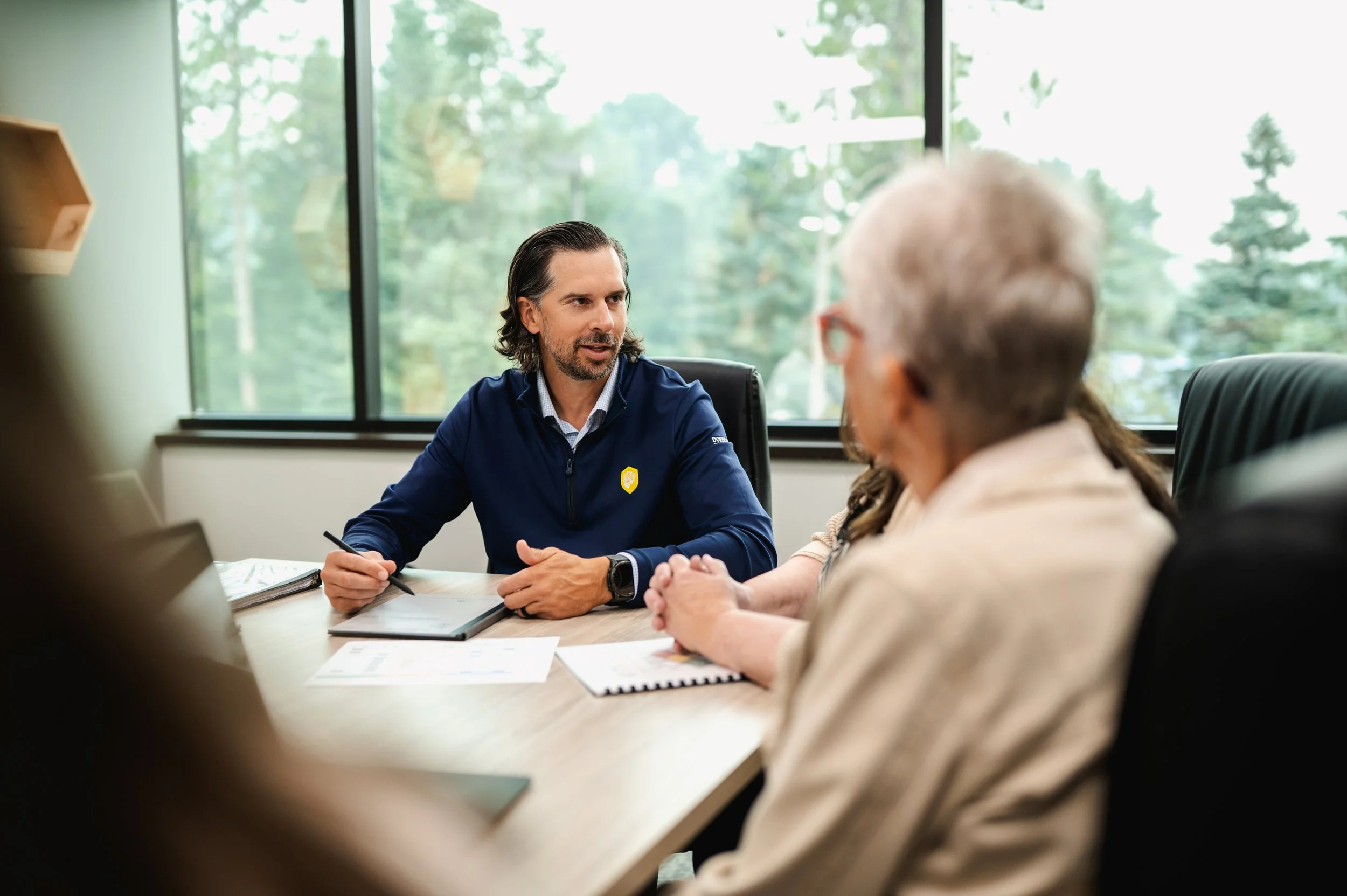
Craig Doescher has spent time on both sides of the table as investor and operator
There was a point in my early twenties where I had the opportunity to take a more conventional professional track. That track might have been more conventional for a studious young man like myself. The professional path certainly worked out great for my Dad and Uncle, two of my most important role models in life.
But for me, it simply felt boring and uninteresting.
The work of professional advising itself was attractive: complex problem solving, highly technical subject matter, helping others achieve their goals, etc. But when it came to the career path, I felt a sense of dread: do A, then B, then C, and ultimately you’ll land at D. That predictability sounded dreadful.
I just wanted an uncapped upside and an undetermined future where anything could happen. I was willing to accept the risk that came with it.
Simply put, I need the unknown; the intrigue of not knowing what’s next. Why? Because this means I can change the outcome. I have agency and can forge my own path.
Since you’re a business owner too, I bet you get it.
When Professional Business Advisers Don’t Speak Entrepreneur
Now, let’s talk about when these two worlds collide: a risk-averse professional adviser and an entrepreneurial business owner coming together. Advisers need business owner clients, and business owners need advisers. These serve distinct and very different roles. In my experience, too many professional advisers don’t understand entrepreneurs and never will. They fail to put themselves into the entrepreneur’s shoes.
I’ll never forget my own experience in this matter. I started Doescher Group late in the year, but I managed to get two paying clients before New Year’s Day. As a result, I needed a CPA who could walk me through filing business taxes for the first time. I was excited to meet my new CPA because they worked with business owners and my new firm did too. Maybe they’d be a great thought partner as I forged a path with my new venture?
When I sat down with my new CPA for my initial meeting, I happily shared my vision for Doescher Group, expecting to hear a lot of resonance with my plan. But I got smacked in the face with reality. Despite the potential synergy that was obvious to me between what I was starting up and what they did, they responded with something akin to, “OK, buddy. Best of luck with that!” They clearly saw what I was up to as a pipe dream.
Another time, we had a client with a lot of unconventional ideas. This included how he negotiated business deals. He didn’t use professional terms and sometimes the structure he proposed seemed odd at first glance. He also was willing to make wholesale changes at a moment’s notice if we saw an opportunity to get a deal done with a seller. It might have looked a mess, but underneath it all there was an inner entrepreneurial logic that worked brilliantly.

Many times, he would approach his attorney with a deal he’d struck, and I’d watch his attorney look at him like he was from another planet. He would effectively hear, “That’s not how this should be done.” But ultimately, my client was OK with the risk because he saw the entrepreneurial reward on the other side.
Finally, in another situation our client’s business broker attempted to convince a client not to ask for something he wanted. He said that it would be a red flag to the buyer and that they might walk away. But for the client this was an important request that if he didn’t get it, he might not be willing to move forward with the transaction. The broker was missing this key, deal-breaking factor in the very deal he was trying to broker.
Time and time again, professional advisers fail to put themselves in their client’s shoes. Instead they stay firmly planted in their own shoes and look at the client’s situation as if it were them considering what to do for themselves. The result is advice that is not tailored to the client’s needs, and ultimately is both limiting and demotivating to the business owner.
Why You Still Need Professional Advisers
If you’re an entrepreneur, you might be thinking, “That’s right, Craig! That’s why I stay away from these professional types and figure this stuff out myself. These expensive professionals just slow me down and say ‘no’ all of the time.”
I get this instinct. It’s super frustrating to feel belittled or misunderstood by people that you are paying who work for you. But professional advisers are key when you are making big decisions. They might be too risk averse to understand your vision, but they do know things you don’t know and can help you avoid making avoidable mistakes. They can help you see your blind spots and prevent you from doing something you regret down the road. Because while you might not care about the rules as much as they do, sometimes the rules do matter. And you deserve advice that can help you steer wisely through complex situations including legal and bureaucratic pitfalls.
That’s why I understand your frustration, but I also don’t want you to steer just on instincts alone. The world of business is complicated and you deserve the best, clear-eyed advice.
Meanwhile, don’t forget that paying for a professional adviser’s advice does not mean you need to always take their advice. Sometimes you might take their advice, sometimes you might reject it, but more often than not it will drive conversation that results in more clarity for you.
The Solution: An Entrepreneurial Adviser Who Speaks Both Languages
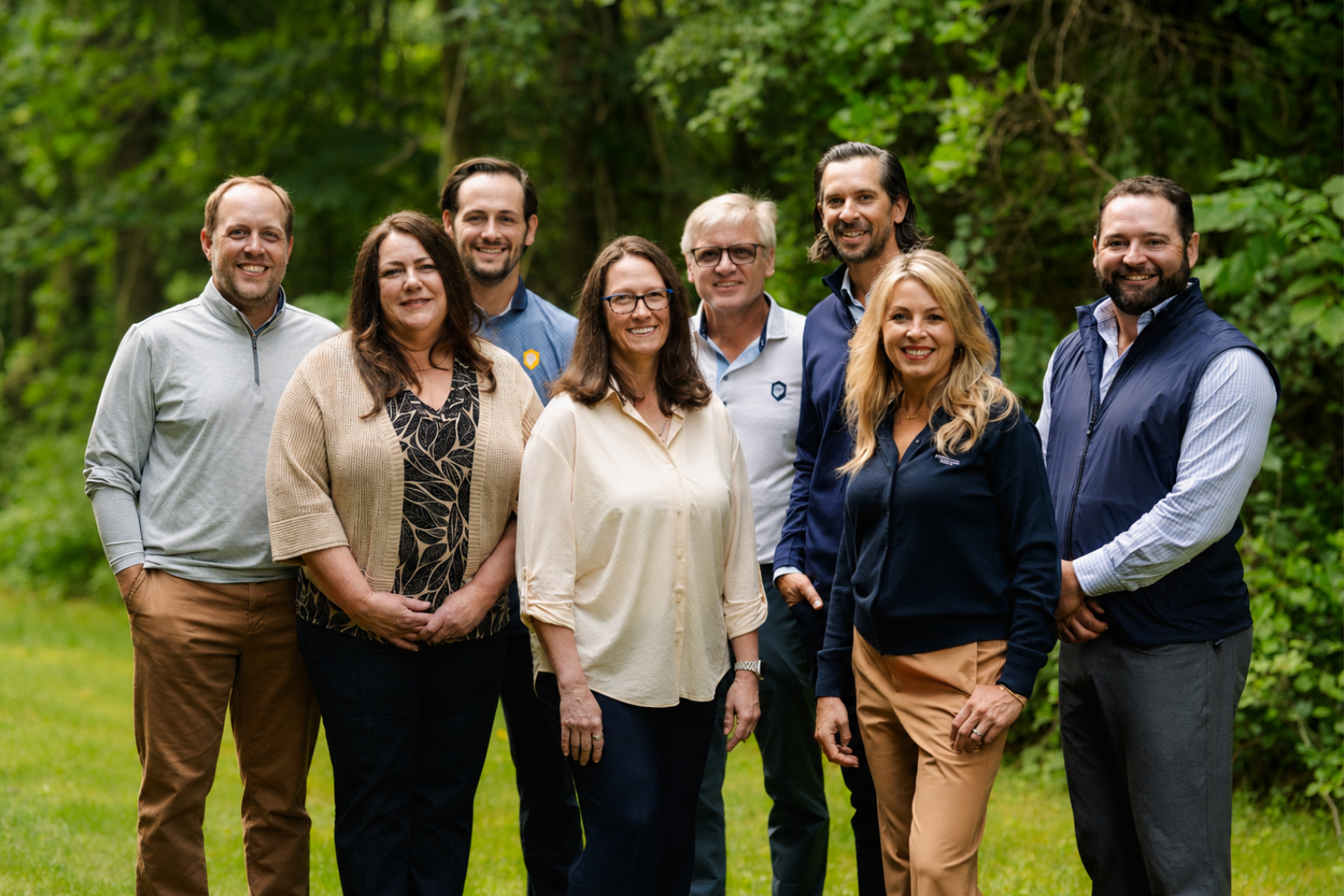
Doescher Group Team
But wouldn’t it be great if you could have an adviser who could appreciate your vision AND had the strategic expertise to help you make it happen while jumping through every arbitrary legal hoop out there?
Related Read: The Two Languages of Business
The best solution, in my opinion, is to find an entrepreneurial adviser who can see both sides. (That’s where Doescher Group comes in.) Someone with deep training and knowledge, but also the ability to step back and see the whole human picture.
The Missing Piece: How Doescher Group Complements Investment Banking
Someone who can see the exciting possibilities AND help the entrepreneur make savvy return-on-investment calculations. Someone who can provide the pros and cons, and educate a business owner about the potential impacts of a decision, but ultimately leave the final decision making authority to the one who bears the risk.
At Doescher Group, we call this Steadfast Alignment. It’s really understanding what the client’s goals are and avoiding crushing their entrepreneurial spirit. It’s exactly why I chose this patch and I love helping others along it.
If you’re ready to make your next big decision with an adviser who actually gets what you're building? Book a free no pressure discovery call with Doescher Group, and let's map out the clearest path forward for your business.
Not ready for a call yet? Start with the free Talk Like a CFO Cheat Sheet — six financial concepts in plain English, so you can walk into your next conversation with an adviser already speaking their language.