
Focus on “One” Thing

The Power of Focused Consistency As A Business Owner
Great leaders know that what moves the needle most isn’t innovation or charisma—it’s consistency.
In our coaching work with business owners and leaders, one theme consistently emerges:
Transformation doesn’t come from grand gestures or radical overhauls. It comes from mastering one thing… a habit or rhythm practiced faithfully over time that, ironically, can change everything.
The story below captures this truth beautifully.
Great Leadership Is “Boring”
Recently, I had the opportunity to hear one of my favorite leaders, Craig Groeschel, speak at a leadership conference in Chicago. He opened with a line that caught my attention immediately:
“What you think makes a leader great is probably wrong. It’s not charisma, fame, hype, or quick results. Great leadership is boring.”
At first, that might sound underwhelming. But it struck a chord with me. I’ve often joked that if I had a tombstone inscription, it would read:
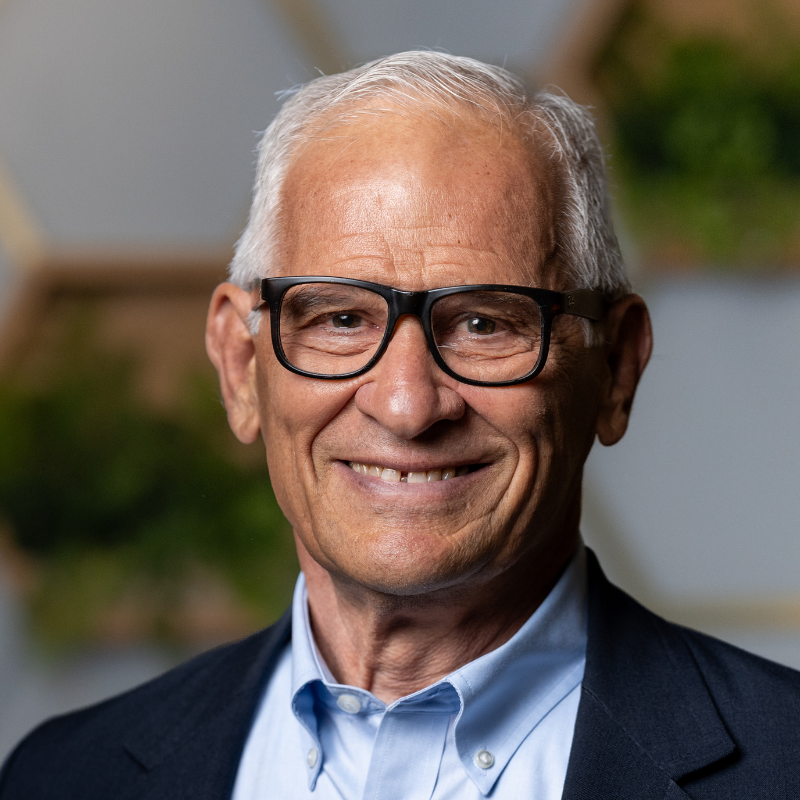
“Here lies Tom Doescher. He showed up for work on time every day.”

Pretty boring, right? Yet over the years I’ve learned that steady consistency might just be the most underrated form of greatness.
The Formula for Lasting Impact
I will resist summarizing his entire presentation, but here is Groeschel’s simple little formula that summarizes the heart of great leadership:
Consistency + Faithfulness over Time = Lasting Impact.
Simple, but profound.
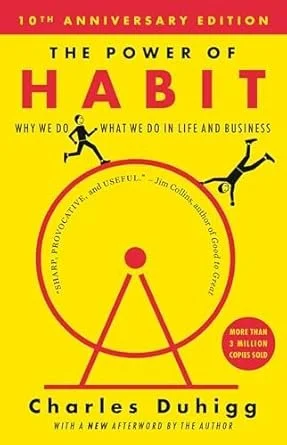
He illustrated this principle with a story from Charles Duhigg’s book The Power of Habit, in which he coined the phrase “Keystone Habits.”
When Paul O’Neill became CEO of Alcoa, a struggling steel company, he shocked everyone by making workplace safety the company’s top priority—not profits, not productivity, not innovation. Many investors thought he’d lost his mind.
But as O’Neill focused relentlessly on safety—engaging employees, revising processes, and tracking accidents—everything else began to change. Communication improved. Accountability increased. Productivity rose.
During his 13-year tenure, Alcoa’s annual net income grew from $200 million to $1.5 billion.
Not so boring after all.
What I Observed in My Own Work
In my 20 years serving manufacturing clients at Plante Moran, I noticed a similar pattern: the most profitable companies often had zero accidents for the entire year. That correlation fascinated me. Safety wasn’t just about compliance—it was a reflection of disciplined leadership and a culture of care.
Discovering My Own Keystone Habits
Groeschel’s challenge was simple: What one or two small habits, practiced consistently, could transform your life and leadership?
As I thought about my Keystone Habit(s), I thought of three:
#1 My Morning Time of Reflection
I start nearly every morning with quiet time, which some might call meditation. It helps me refocus on what’s “really” important: the people who matter most and the priorities that deserve my best energy. On the days I skip it, I notice the difference. My mind feels scattered, and my day lacks intention.
#2 Self Assessment of Client Meeting
For most of my client meetings, I drive to their office or a restaurant. During the ride, I think about the client and the prepared agenda with the thought of providing them at least one “great” idea to improve their business, their leadership, or a personal self-care tip. On my return trip, I reflect upon the meeting. Did I offer the client an actionable suggestion or two? If the answer is “NO”, I will resign as their advisor.
#3 The Gift of Encouragement
Over time, I’ve realized I’m wired to notice when others are excelling at something, and to put a spotlight on it. Sometimes that looks like a handwritten note, reaching out to a supervisor praising an employee, or simply using someone’s name when I thank them. (We all light up when someone remembers our name.)
This would include receptionists, trainers at my gym, wait staff, etc. I think you get the point. I believe a side benefit of my encouragement is that it gives people hope.
Small Acts, Big Ripples
Years ago, one of those simple notes led to a surprise: a former colleague reached out after 14 years to ask if I’d say a few words at his retirement. That moment reminded me that faithfulness over time—the quiet, consistent habits—can echo far longer than we realize.
That’s what Craig Groeschel meant by lasting impact.
Your Turn
So I’ll leave you with the same question I’ve been reflecting on:

Keystone is defined as: noun, a central stone at the summit of an arch, locking the whole together; or in business, the central principle or part of a policy, system, etc., on which all else depends
What is your keystone habit—and are you practicing it consistently?
If not, what might change in your leadership, your relationships, or your legacy if you did?
The Coaching Takeaway
At Doescher Group, we often help leaders uncover their own “one thing”—the keystone habits that unlock clarity, consistency, and capacity. It’s rarely glamorous, but it’s always transformative. And sometimes, we’re too close to it to see it on our own. This is where a coach or mentor can be invaluable.
If you’d like help identifying what drives lasting impact in your life and leadership, our Executive Coaching program is designed to help you find it and stay faithful to it over time.