

Originally written by Dan Doescher. Updated by Tom Doescher.
Note: If you missed the introduction or earlier steps in this series of blog posts, please click here to read it.
Many years ago, I asked my wife, Jan, if she thought I was competitive.
The look on her face said it all. I got it. I am as competitive as most.
And let’s admit it: most business owners and leaders believe their company is different from everyone else. In many ways, that is a good thing. You should believe in your business. You should understand what makes your team, your service, your product, your process, or your customer relationships worth choosing.
But believing you are different is not enough.
You also need to understand how to respond to competition.
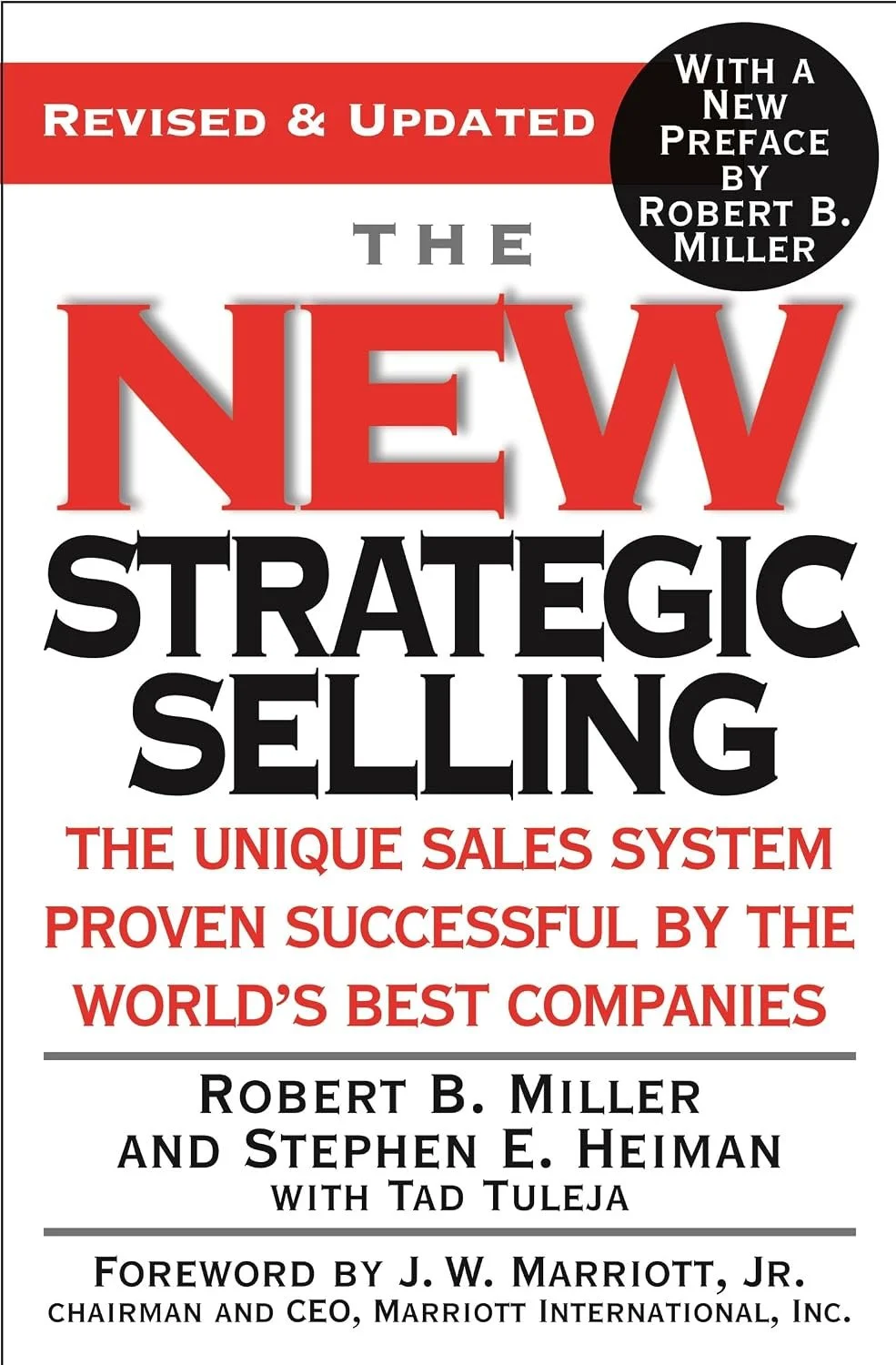
Robert B. Miller and Stephen E. Heiman’s book, The New Strategic Selling, acknowledges the need to be aware of the competition. At the same time, the authors warn against focusing so much on competitors that you unintentionally send a “reactive” or “me-too” message to a potential new customer or client.
That is not where you want to be.
If the conversation becomes all about your competitor, you may allow them to define the rules of the game. Instead of helping the target understand your value, you may end up reacting to someone else’s claims, pricing, or positioning.
Miller and Heiman identify several negative consequences of focusing too much on competition:
It allows the competition to write the rules of the game.
It advertises your weaknesses instead of your strengths.
It invites price-slashing.
It makes you look unimaginative or uncreative.
It deflects attention from the target’s real concerns.
That last point may be the most important. The goal is not to obsess over the competitor. The goal is to understand the customer’s unmet needs and show how you can help.
I also like Miller and Heiman’s broader definition of “competition.” Competition is not only another company offering something similar. Competition may be any of the following:
They buy from someone else.
They use internal resources.
They use their budget for something else.
They do nothing.
That gives you a much broader view of the barriers you may need to address.

Sometimes your greatest competition is not the company down the street. It may be the prospect’s internal team. It may be another priority. It may be limited budget. It may be the comfort of doing nothing.
That is why playing offense matters.
In sports, playing offense is essential to winning. The same is true in business development. Proactively focusing on your differences is critical. Ultimately, you want your target to see that you know what differentiates you from all other options.
That does not mean bad-mouthing competitors. In fact, I would strongly advise against that. It usually makes you look worse, not better.
Instead, focus on your strengths.
Begin by listing the features of what you do and how you do it that you believe make you stand out from all other options. Then, just as importantly, describe how those differences create benefits for existing customers or clients.
A feature only matters if it leads to a benefit.
For example, your company may have a specialized process. That is a feature. But the customer wants to know what it means for them. Does it reduce risk? Save time? Improve quality? Increase reliability? Create a better experience? Help them serve their own customers more effectively?
That is the connection your team needs to be able to make.
Documenting actual cases where customers or clients have benefited from these differences can be especially powerful. Relatable success stories give your hunters something meaningful to share with targets. They help move the conversation from theory to proof.
As always, it is beneficial to have your key team members involved in developing this type of information. More importantly, it is critical that your team is fully aware of these differences, embraces them, and can easily communicate them to current customers, clients, and targets.
This cannot live only in the owner’s head.
For many owner-operated businesses, the founder or owner is often very clear on what makes the company different. But if the broader team cannot explain it, the message becomes inconsistent. That hurts growth.
So, ask yourself:
What truly makes us different?
How do those differences benefit our customers?
Can our team explain those benefits clearly?
Do we have real stories to support our claims?
Are we leading with our strengths, or reacting to the competition?
Incidentally, if you do not think you are different — or you have not given it much thought — it is time to consider the possibilities and related implications.
Because if you cannot explain why a target should choose you, you should not expect them to figure it out on their own.