

This is a story of a rocky first attempt, a lowball offer Prem almost walked away from, and how the right guidance turned it into a sale worth millions more than he expected.
"I can say without hesitation that Doescher Group made me millions more than I would have made without them."
— Prem Mukerjee, founder of Arising Images, Lake Orion, Michigan
Prem Mukerjee built a portrait studio over nearly twenty years and didn't even know it was something he could sell. One lunch changed that.
If you have ever quietly wondered, “Can I sell my business?” - this is the story for you.
Prem ran Arising Images, a portrait studio in Lake Orion, Michigan, for almost twenty years. He wasn't planning an exit. He was just having lunch with a friend, the kind of friend who loves connecting people, and mentioning where the business was at. His friend said the words that started everything: "You should really talk to my friend Craig at Doescher Group."
"I Didn't Even Know You Could Sell a Business"
That is not an exaggeration. When Prem sat down with Doescher Group, the idea of selling was barely on his radar.
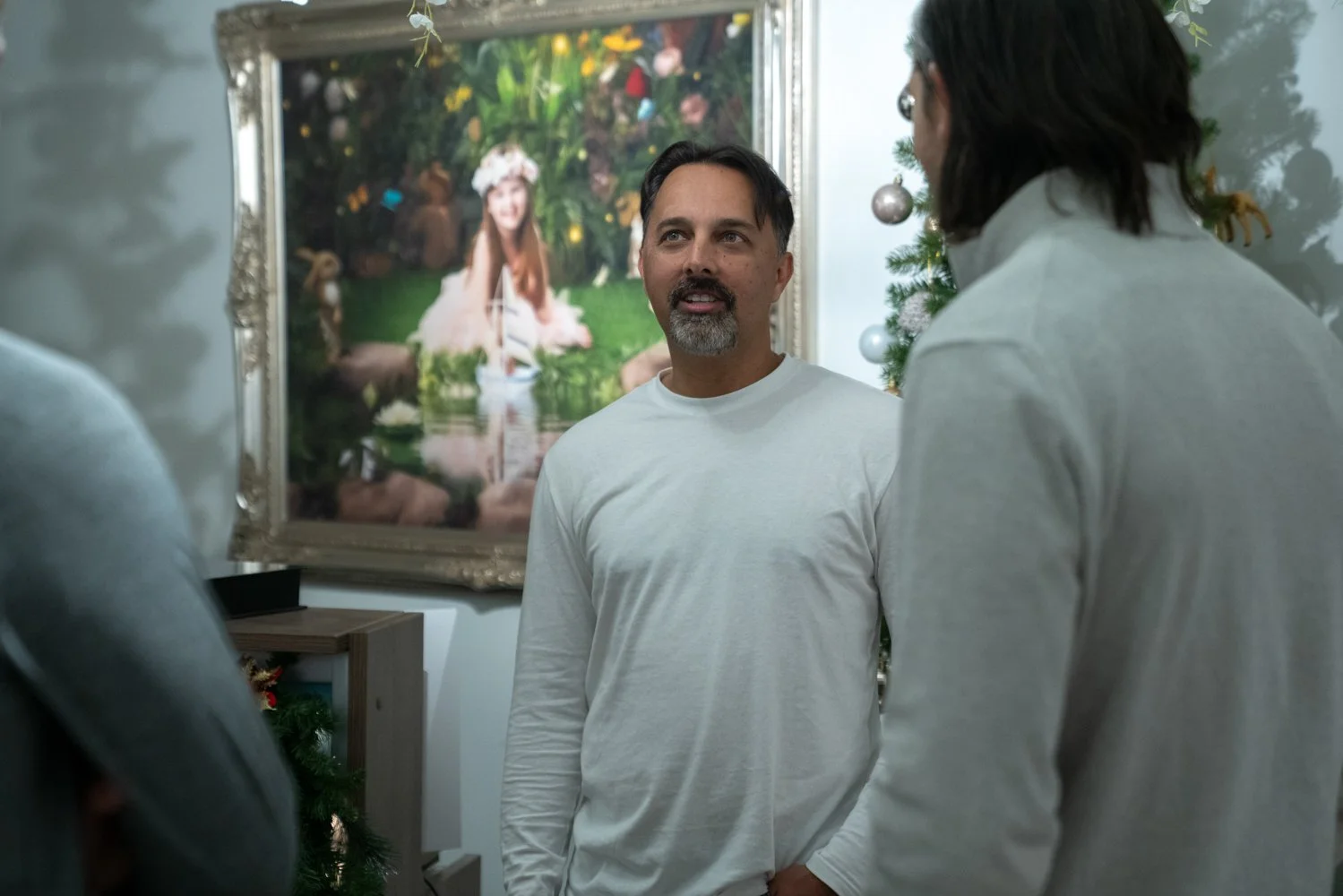
Prem Mukerjee, founder of Arising Images, Lake Orion, Michigan
"I didn't know anything about the process. How do you even sell a business? You just put it on Facebook and say, hey, I'm thinking about retiring, anybody want to buy this?"
He assumed that if the business were ever salable, it would take three, maybe five more years of changes to get there. Then Doescher Group looked at his QuickBooks file and came back with a very different message.
"He's like, I'll bet I could probably sell your business for XYZ. And I'm like, Craig, here you go, man. Do it."
Ready in the Ways That Count, But Not on Paper
Here's the interesting part. Prem had actually done a lot right. He was detail-oriented. He had documented training procedures and managers in place. Operationally, the business was in good shape. What he didn't have was the back-end, the bookkeeping and the organization, packaged in a way that showed another business this was a salable asset.
In plain terms: a great business and a salable business aren't the same thing. A buyer can't see your systems or your reputation. They can only see what you put in front of them, so the numbers have to be organized and tell a clear story.
| The moment | What Prem faced | What Doescher Group did |
|---|---|---|
| Knowing the value | Thought it would take 3–5 more years to be salable | Reviewed the QuickBooks and said "you could sell it now" |
| Packaging the business | Great operations, but the books weren't buyer-ready | Organized the back-end to show a salable asset |
| A rocky first round | Two weak offers, then one he'd "not get out of bed for" | Kept perspective and gave it another, smarter shot |
| Raising the offer | Didn't know how to justify a higher price | Crafted the story behind the business, and the offer climbed |
| Speaking the buyer's language | Knew his numbers, couldn't communicate them to a buyer | Acted as the interpreter between owner and buyer |
| Having his back | Needed honest advice, not just momentum | Told him plainly when to walk, always in his interest |
The First Round Didn't Work, and That Was Okay
The honest part of Prem's story is that it did not go smoothly at first. The first time the business went to market, it drew two weak offers that went nowhere. He was, in his words, pretty disheartened.
Craig's response is a lesson in itself. Rather than panic, he kept perspective: the contract with the broker ran a year, so there was no harm in letting it have another shot. They waited a few months, put it back on the market, and got one offer, a low one.
"I said, Craig, I'm not even going to get out of bed for that offer."
A First Offer is Not the Final Offer
This is where, in Prem's telling, Doescher Group became invaluable. They explained something Prem simply didn't know: an offer is a starting point, not a verdict.
"They said, just like with a house, that's not your final offer. Now you negotiate."
Then came the move that spoke to Prem personally. Doescher Group showed him how you take a business and craft a story behind it. That landed hard, because storytelling was the whole point of Prem's studio. They never just sold a product, they sold a story, an emotion. Now Doescher Group was doing the same thing with the business itself. The offer went up, and up, and up, until it was one worth taking, and he carried it all the way to close.
The Interpreter in the Room
Prem knew his own numbers cold. He knew how his studio compared in the industry and where the growth was. What he couldn't do was translate any of that into what a buyer needed to hear, because he didn't understand the buyer's headspace.
"Craig spoke a foreign language I didn't know. He was the interpreter. He took what I had and translated it into another language, and delivered that to the buyer."
Which is why Prem is blunt about who really closed the deal.
"I tell people Craig sold my business. The broker didn't sell my business. Craig sold my business."
Someone Who Actually Had His Back
The difference Prem felt most was trust. He spent roughly ten times more time with Doescher Group than with the broker, and he could feel that Doescher Group wasn't just telling him what he needed to hear to get to close. Doescher Group would advise him honestly, sometimes to say, I don't think you should entertain this. The broker, he felt, was mostly focused on keeping the deal moving. Craig and Doescher Group were focused on Prem's best interest.
"I would never, ever consider going through what I did without having hired them."
What Prem's Story Means for You
Three lessons stand out. First, you may be more salable than you think, so it's worth finding out before you assume you need years of changes. Second, the first offer is never the finish line, and knowing how to negotiate from it is where real value is won or lost. And third, selling well is about translation, taking what you know about your business and communicating it in the language a buyer actually speaks.
And if you are a service business owner working out how to sell a service business, the same three lessons apply.
That is exactly the work we do for owners. If selling is anywhere on your horizon, the best first step is simply a conversation. See how we help owners sell their business, or start the conversation with Doescher Group.
Frequently Asked Questions
Can I sell my business now, or do I need to wait years?
You may be more ready than you think. Prem assumed he needed three to five more years, but once his numbers were reviewed, he could sell right away. It's worth finding out before you delay. It ultimately depends on your own personal goals. The majority of businesses will be liquidated and never sold at all. But if your business is salable, the question will be is it enough, which is an answer that requires not only Doescher Group’s expertise, but also the expertise of your financial advisor and CPA.
How do you negotiate after a low offer on your business?
A first offer is a starting point, not the final number. With the right guidance you craft a compelling story around the business and negotiate the offer upward, often significantly, as Prem did. The critical point to understand is that an offer indicates interest. If they are a qualified buyer, this means now it is up to us to convert that interest into an offer that will get the seller to make a deal. This is done with facts, evidence, and persuasion, not with demands.
Why do you need more than a business broker to sell?
A broker lists the business and pushes toward a close. Doescher Group’s Chief Transaction Officer® service prepares your numbers, translates them into what buyers want, negotiates in your interest, and guides you through the whole process. Most business owners get swallowed by the sale process and having a temporary resource inside your organization to tame the chaos of that process allows you to remain focused on the most important factor driving a successful outcome: business performance.
What does "crafting the story" of your business mean?
It means presenting the business, its performance, its strengths, and its growth potential, in a way a buyer understands and values, so the price reflects what the business is truly worth. It’s the analogy of leading a horse to water. At Doescher Group we consider ourselves “bilingual”. We know what buyers are looking for and we help our clients tell their story in the most optimal way to achieve their goals. This is often non-obvious to entrepreneurs who tolerate risk for a living.
Thinking about selling your business?

We help owners sell well, on their terms. Start with a simple conversation.
The FieldReady™ Scorecard

The FieldReady™ Scorecard is a 20-point diagnostic across the four areas buyers evaluate first.
It takes about five minutes to complete and gives you a clear picture of where your business stands today, and what's worth improving before any transition conversation begins.