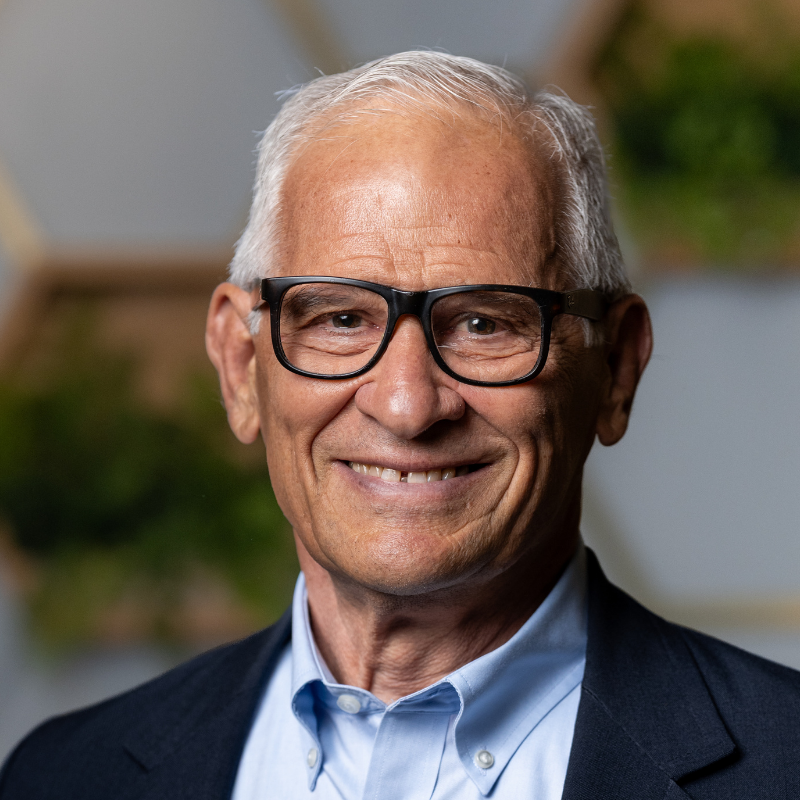

Recently, I heard Jim Collins present his new book, “What to Make of a Life.” Collins may be my all-time favorite business consultant/adviser and author. Over 30 years ago I read Built to Last and have read every one of his books since then. When I was at Plante Moran, we hosted the Masters Forum, an executive education and lecture series, and I heard Collins speak. I was also privileged to join a small group who had dinner with him before his presentation. All to say, he is a very special person to me.
Meeting Jim Collins
I am so glad that I was able to hear him speak about his new book because it is completely different from his first six books. To generalize, I would say that the first six books were about businesses, business owners and executives. This book is about people. When he spoke, he even commented that he has always been very interested in people.
It is the most personal he has ever been. I would highly recommend the book and let him tell his story. But suffice it to say he gets deeply into his relationship with his father and his wife of many years.
The Hedgehog Concept, Applied to People
Like me he makes up phrases to express his points. In this book, he uses the phrase your “One Big Thing” — or for some of us, “Two Big Things.” He would say the One Big Thing is like the Hedgehog Concept from his third and most popular book, Good to Great, which has sold over 4 million copies worldwide.

He defined a Hedgehog as:
What you are deeply passionate about.
What you can be the best in the world at.
What drives your economic or resource engine.
The difference is that he applies the concept to you personally versus your business. As in his other books, Collins deployed a team of 20 researchers (probably Stanford MBA students) who studied the subject over a 10-year period. Now that is some deep-dive research. In the book he shares the different course corrections that he and his team made over the decade of research.
Editor's Comment: I think the reason that I like Collins so much is his depth of independent research and thinking. Prior to reading Collins, I had read hundreds of popular business books where the author basically boasts about something special they did in their company and just assumes it will work for all the rest of us. Then there are the business authors who start with a theory/conclusion and write a book to support their position. Collins starts with questions and begins a decade of research with an independent team. During the process they come up with more questions to research. Finally, Collins begins writing the book.
Encodings, Cliffs, and Fog
In this book, their research is based on identifying matched pairs of similar people and they study their lives in depth. Just to list a few: Gerald R. Ford, Michael J. Fox, John Glenn, Alan Page, Toni Morrison, Meryl Streep, and Barbara McClintock.
In studying each person, they used three filters or parameters:
Encodings — Durable capacities of a person's intrinsic construction that lie within, awaiting discovery through experiences of life.
Flip the Arrow of Money — Instead of “I work to make money” they flip it to “I need money to do what I am 'encoded' for.”
Focus on the Inner Fire — They focus significant energies on their encodings.
Collins would say, “When you find what you are deeply encoded for that ignites a raging fire within, the greatest reward for doing your work is the opportunity to continue doing it.”
Another reason that I loved the book is that it was encouraging for those of us who are in the second half of our lives — or maybe even in Q4. As mentioned earlier, many of the people selected had Two Big Things. From the list above, here are their Big Things:
| Name | Big Things |
|---|---|
| Gerald R. Ford | U.S. President and continued as a Statesman with elected officials from both parties |
| Michael J. Fox | Actor and Parkinson's Activist |
| John Glenn | Pilot/Astronaut and U.S. Senator |
| Alan Page | NFL Hall of Fame Player and Minnesota Supreme Court Justice |
| Toni Morrison | Novelist |
| Meryl Streep | Actress |
| Barbara McClintock | Pioneering Geneticist |
As the research team studied these lives, they observed how the Cliffs in life (health, deaths, and other tragedies) and the Fog of significant negative life changes affect — or possibly lead to discovering — your Big Thing. For example, Michael J. Fox and his Parkinson's diagnosis. Collins also used the label Fog of Retirement. The research team found scant evidence that the people in the study had an explicit goal of working until a target retirement age, to be followed by a life dominated by leisure.
By the way, a small tidbit of advice related to being in the Fog was to avoid making big, irreversible decisions. Instead, Collins suggests taking simplex steps (also a phrase I personally had never heard, but I'm glad I have now) — or you might say just keep moving forward.
In “Great by Choice”, Collins' researchers studied the impact of luck on great companies. He again studied luck with the 34 people selected for this study and provided some pretty cool stories. Collins' conclusion is that the differentiating factor is how leaders leverage luck. Great companies achieved a much higher what Collins calls Return on Luck, maximizing the benefits of positive events and successfully mitigating the impact of negative ones.
He applies the same conclusion to individuals and luck. In other writings I have provided a great example of the positive return on luck. I will abbreviate the story here. My brother Dan, a Plante Moran partner, felt for years that we needed a Japanese audit partner to penetrate the fast-growing number of Japanese transplant auto suppliers in the U.S. A Japanese audit partner who specialized in Japanese auto suppliers, from a Big 4 firm, was looking to change and contacted Dan (another long story). He was also talking with other firms who did not express much interest, and he ended up joining our firm. Today Plante Moran has over 100 Japanese auto suppliers and many millions of dollars of fees because of Dan's Return on Luck.
My Own Two Big Things
Sorry for throwing all these concepts at you, but here’s just one more: NATILIE (Not All Time In Life Is Equal). I think to make this point I will tell my story and what I think are my two Big Things.
If you have been reading my books or blogs, you know that at 17 years old I went to Western Michigan University (WMU) to play football and, upon graduation, planned to start my career life goal of becoming a high school football coach. Well, using Collins' words, I hit a cliff when I did not make the football team and ended up in the fog.
At this point, I realized that I never wanted to be a teacher, but that was a requirement to be a football coach. So now what? I went to one of my football buddies who was in business. He helped me select business classes going forward. One of them was accounting, which I found interesting and easy compared to my two calculus classes.
During one of my classes, I noticed a message to students displayed on the bulletin board. It stated that the WMU Accounting Department professors offer counseling to students. The professors were designated alphabetically, with students whose last names ended A through D assigned to Professor Everett.
To abbreviate another very long (lucky) story, Professor Everett was able to get me an internship and full-time job at Plante Moran, where I spent 40 years.
I loved Plante Moran and have always felt blessed to have spent my first career there. However, it was not accounting that I loved. It was business, and advising/coaching clients and Plante Moran partners and staff. I now believe my Big Thing is coaching business owners. I am encoded to be an executive coach.
One of my longtime friends, years ago, told me that he thought I had the gift of “discernment,” which at the time I'm not sure I understood. But as I reflect back on my life, I have always been very curious, really interested in people, have met all kinds of people during my global travels, and in the past couple of decades have read over a thousand books. I looked up the definition of wisdom (no, I am not Solomon): wisdom is the ability to use your knowledge, experience, and good sense to make right choices. When you read Collins' book, this will make even more sense to you.
A Second Big Thing, and What's Next
In more recent years, I have started writing more. When I led the Manufacturing Practice at Plante Moran, I found myself writing more and more as part of my leadership communications. During our 15 years leading mission teams around the world, I found myself writing to create tools to help people have successful trips. In 2011, when Barbara and I launched Doescher Advisors, I began writing blogs and now have written over 300. This led to writing and publishing 15 books. I believe my second Big Thing, which is actually accelerating (I currently have 3 books drafted that have not been published yet), is expressing my views on life through writing, like this blog post.
Hope this brief summary of Collins' book and my personal stories will move you to get a copy and read it for yourself.
I would love to hear from you when you discover your Big Thing.
Frequently Asked Questions:
What is Jim Collins' new book “What to Make of a Life” about?
What to Make of a Life is Jim Collins' latest book, and his most personal. Unlike his earlier books, which focused on businesses and executives, this one applies his research methods to individual people: studying matched pairs of well-known figures to understand how they found their sense of purpose.
What are “encodings”?
Encodings are the durable, intrinsic capacities within a person, waiting to be discovered through life experience. It's the individual version of the Hedgehog Concept Collins introduced in Good to Great, applied to people rather than companies.
What's the difference between this book and Good to Great?
Good to Great applied Collins' research to companies. What to Make of a Life applies the same rigorous, decade-long research approach to individuals, asking what makes a person's life, rather than a business, great.
What does Collins mean by “Return on Luck”?
A concept from Great by Choice: great companies and people don't necessarily get more lucky breaks than others, but they get a much higher return on the luck they do get by maximizing positive events and minimizing the damage from negative ones.
What are Tom Doescher's “Two Big Things”?
Coaching business owners (developed over 40 years at Plante Moran) and writing. He has published over 300 blog posts and 15 books, with three more currently in draft.