

Over the past several years, I have been part of many discussions centered on the question, “Is he or she a leader?”
I have heard more than one person whom I sincerely respect say, “We are all leaders.”
I have struggled with that premise.
Then my partner, who also happens to be my wife, told me, “I am not a leader.” To which I responded, “Well, you are certainly not a follower, so I think you must be a leader.”
According to management expert Peter Drucker, a leader is someone with followers. Author John Maxwell says leadership is influence, nothing more and nothing less.
Unfortunately, it seems to me that the words “leader” and “leadership” have become overused and in-vogue terms, much like “robust” and “paradigm.” Confusion results when someone who is clearly not a leader is given a leadership role, or when someone who has the potential to be a leader is placed in a role they are not yet qualified to lead.
In fact, I can see how this applies to me. I think I am a leader, but I also realize I would not do well in many types of leadership roles.
Our beliefs about leaders and leadership are:
Leaders are born, meaning not everyone is a leader.
My partner and I believe and have dedicated the rest of our lives to discovering, encouraging, and mentoring what we call “dormant” leaders. For whatever reason, many born leaders have not had the good fortune of having a mentor to help them develop their gift of leadership.
Great leaders are a work in progress. They are lifelong learners, continually developing and honing their leadership skills. The best leaders get better every year.
Some leaders are better at leading a small platoon than a whole army, while other leaders are better at leading the army.
Not all leaders can lead everything. Call it capacity. Not everyone could lead GE like Jack Welch or Jeff Immelt.
I would like to expand on point number five and directly address leaders of leaders, as well as anyone trying to figure out what kind of leader they are.
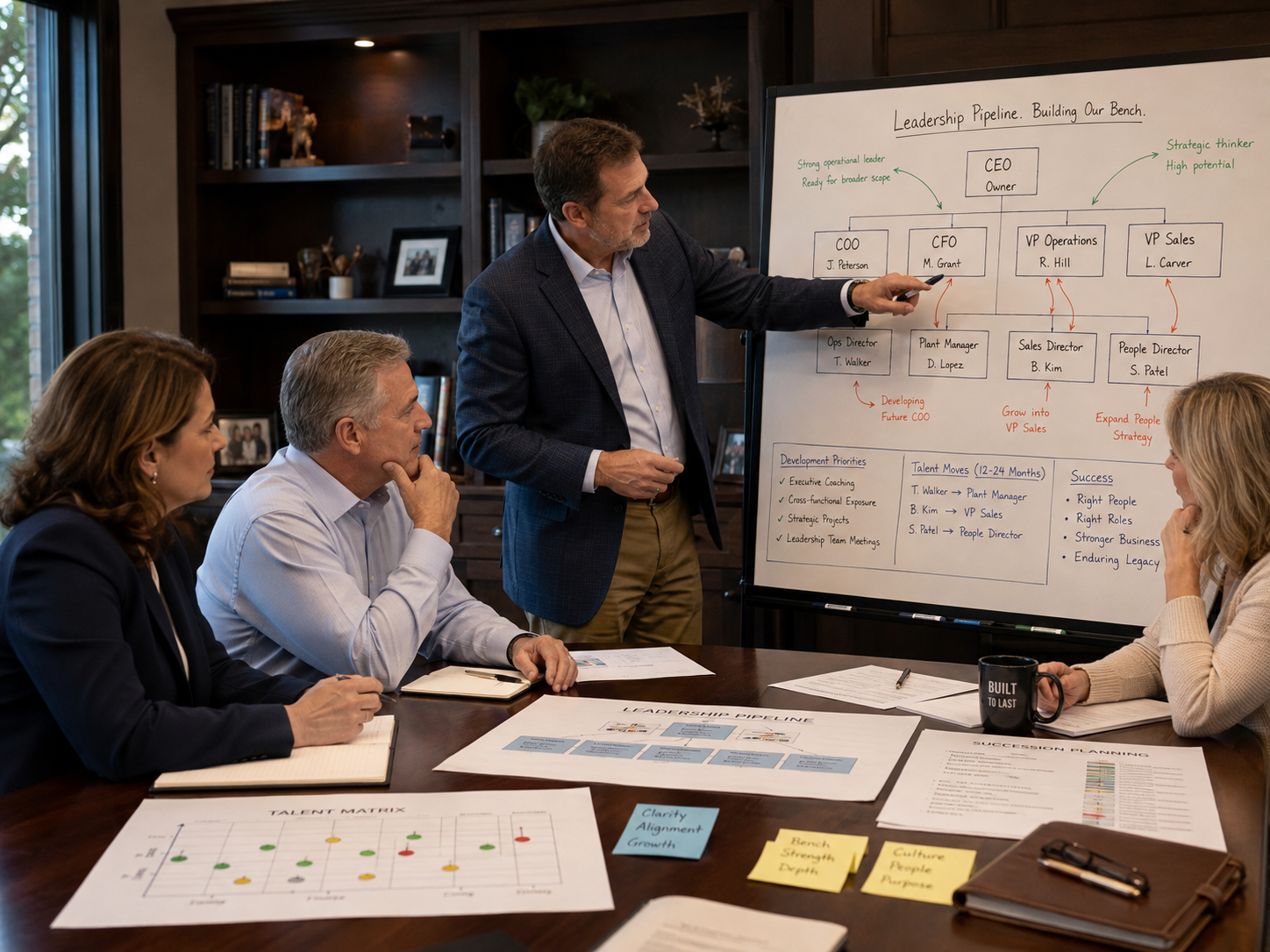
“Capacity” may or may not be the perfect word, but I will use it to explain my theory. Different leaders have different capacities for leading. To illustrate the point, I will use a manufacturing company, drawing on more than 20 years of experience in that industry.
If you know anything about manufacturing, you realize a lot of money is made or lost on the shop floor by machine operators. The operators need a team leader or coach, often called a production supervisor.
When you observe a great supervisor, it is like listening to a jazz quartet. When the supervisor is a great leader, the operators are measurably more productive and they love their jobs.
At the same time, most production supervisors, even great ones, would not be able to function as the plant manager. The leadership skills the plant manager must possess are substantially different from what is required of the production supervisor.
The plant manager is like an orchestra conductor, while the production supervisor is more like a first-chair musician. Finally, the owner, CEO, or general manager of the company is like the president or CEO of the orchestra. They sit in the audience, somewhat helplessly, while the conductor and musicians perform.
As mentioned above, leaders who can lead an entire army may not be as gifted when it comes to leading a smaller platoon. The challenge is to figure out what type of leader you are.
For business owners, this is a very practical issue. One of the most common leadership mistakes is promoting a strong performer into the wrong kind of leadership role. Another is failing to develop a capable leader because no one has taken the time to identify their capacity, mentor them, and match them to the right opportunity.
If you are a leader of leaders, your job is to help each leader grow, reach their fullest potential, and operate in a role that fits their capacity and giftedness.
That kind of leadership takes observation, patience, honesty, and coaching. It also requires the humility to admit that not every good leader is good for every seat.
Note: I saw an interesting article written by Michael Watkins entitled “The Big Shift: How Managers Become Leaders” in the June 2012 Harvard Business Review. As you know from my April 30 blog, I am not a big fan of labeling people as “managers.” However, I still found Watkins’ article thought-provoking.
The leadership question is not only, “Is he or she a leader?”
A better question may be, “What kind of leader are they, and where can they be most effective?”
Strong companies need more than willing leaders. They need leaders matched to the right roles, with the right support to keep growing.
Button CTA: Start the Conversation