

Originally written by Dan Doescher. Updated by Tom Doescher.
In my work with clients, especially industrial B2B clients, I often find that we wind up discussing one particular problem: the lack of business from “new” customers or clients.
That sounds simple enough on the surface. Every business owner wants new business. Every leadership team wants a stronger pipeline. Every company wants to know that tomorrow’s revenue is not completely dependent on yesterday’s relationships.
But when you get underneath the surface, the issue is rarely just “sales.”
Sometimes the company has become too dependent on referrals. Sometimes the owner is still the primary rainmaker, even though the business has outgrown that model. Sometimes the technical experts are excellent at serving clients but uncomfortable developing new relationships. Sometimes the team is busy taking care of current customers, which is important, but no one is consistently focused on the discipline of finding and developing new ones.
And sometimes, if we are being honest, the company simply has not built a real game plan for hunting.

Dan Doescher
Several months ago, I began capturing my thoughts and ideas on this subject. As I reflected on what I wanted to say and how I wanted to share it, I found myself thinking about one of the best business developers I have ever known: my brother, Dan.
Many of you knew him as “Uncle” Dan or Dan Doescher. I had the privilege of knowing him his entire life, and I observed him in many different situations and environments. His relationship-building skills were extraordinary.
After an exceptionally successful and rewarding career at Plante Moran, Dan launched Sandbox Partners International. Sandbox represented companies and gave them this promise:
“Bringing partners the lifeblood of new business.”
I love that phrase because it gets right to the point. New business really is the lifeblood of a company. Without it, even a strong company can slowly become vulnerable. Current customers may be loyal, but customer needs change. Markets shift. Competitors improve. Key contacts retire or move on. Economic cycles come and go.
A healthy business cannot simply hope new opportunities show up. It needs people who are intentionally cultivating relationships, opening doors, listening for needs, and building trust long before a proposal is ever written.
While at Plante Moran, Dan was often pointed to as the poster child for a new business development/rainmaker partner. Among a wide variety of industries, he was successful in attracting new clients representing government, manufacturing, distribution, automotive, and service businesses.
Read more about Dan & his legacy here.
That kind of success does not happen by accident.
In preparing for this “Hunter” series, I read a number of great books and articles — including some recommended by several of my readers — describing the “best” salespeople and business developers. Dan and I had many thoughts on this topic, and one of the ideas I continue to believe is this:
The most successful business developers are professionals who meet the needs of others first.
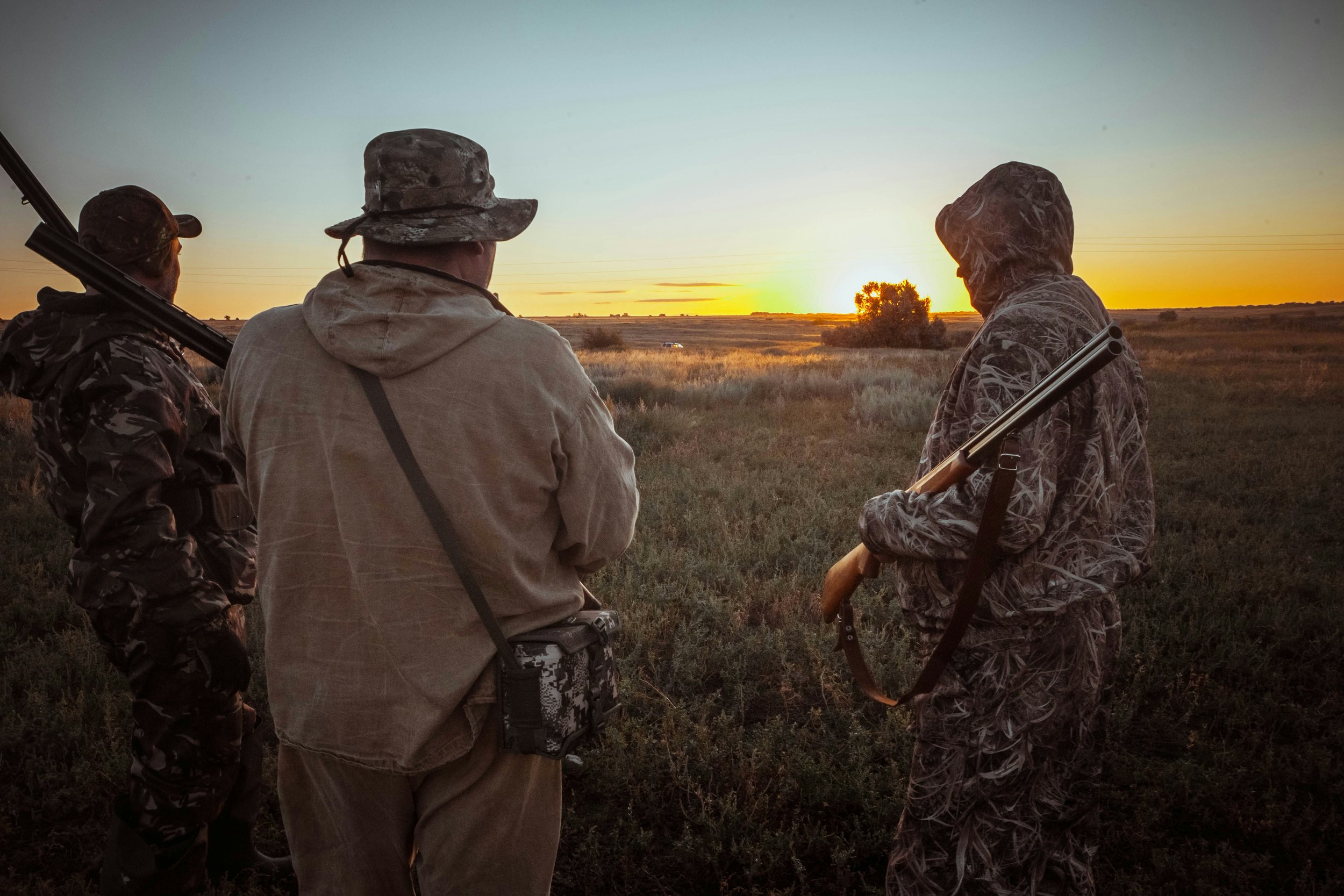
Photo by Evgeniy Smersh on Unsplash
That may sound counterintuitive to some people. After all, if the goal is to win new business, shouldn’t the focus be on selling?
In my experience, the best hunters do not lead with selling. They lead with curiosity. They ask good questions. They listen carefully. They look for ways to help. They are disciplined, but not pushy. They are persistent, but not self-centered. They understand that people do business with people they trust.
This is especially true in owner-operated businesses and industrial B2B companies, where relationships still matter a great deal. These are not usually impulse-buy environments. Decisions are often complex. Trust is earned over time. A business developer has to understand the company, the customer, the market, the problem, and the people involved.
That requires patience. It also requires a certain kind of humility.
As I studied this subject, I thought of a number of people I know who excel in this area. But when I benchmarked Dan against the criteria of the experts, he was a bull’s eye.
He understood that business development was not about collecting business cards or delivering clever sales pitches. It was about identifying real needs, building real relationships, and creating real value.
That is why I believe this series matters.
For many business owners, the lack of new business is not just a revenue issue. It is a leadership issue. It is a strategy issue. It is a team development issue. It is a sustainability issue.
If the owner is still the only true hunter, the company has a problem.
If the sales team is waiting for leads instead of creating opportunities, the company has a problem.
If the organization has great technical talent but no one is teaching those professionals how to build relationships, the company has a problem.
If new business development is treated as an occasional activity instead of a disciplined habit, the company has a problem.

Business development is not magic.
The good news is that this can be improved.
Business development is not magic. Some people may be naturally gifted at it, but many of the most important behaviors can be learned, practiced, coached, and strengthened over time.
That is what this series will explore.
We will talk about what it means to be a hunter.
We will look at the mindset, habits, relationship skills, and practical disciplines that separate successful business developers from those who merely talk about wanting new business.
We will also try to make this useful for business owners who are asking an important question:
How do we build a company where new business development is not dependent on one person?
That question is worth asking.
Because the stronger your business development culture becomes, the less fragile your company becomes. And for owner-operated businesses, that can have a meaningful impact not only on growth, but also on value, transition, leadership development, and long-term freedom.
I hope you enjoy the Hunter series. I also hope it honors Dan’s legacy and the many lessons he left behind for those of us who care deeply about helping businesses grow the right way. Below, you will find links to the 8 steps that Dan defined for the Sandbox Hunters’ Game Plan. Enjoy!