

Level 5 Leaders Know How to Have Crucial Conversations
I thought it would be helpful to summarize my Crucial Conversations blog series in one place.
Crucial Conversations, by Kerry Patterson, Joseph Grenny, Ron McMillan, and Al Switzler, was a groundbreaking addition to the Top Picks on the Doescher Advisors book list. It was published in 2002, and somehow I missed it at the time.
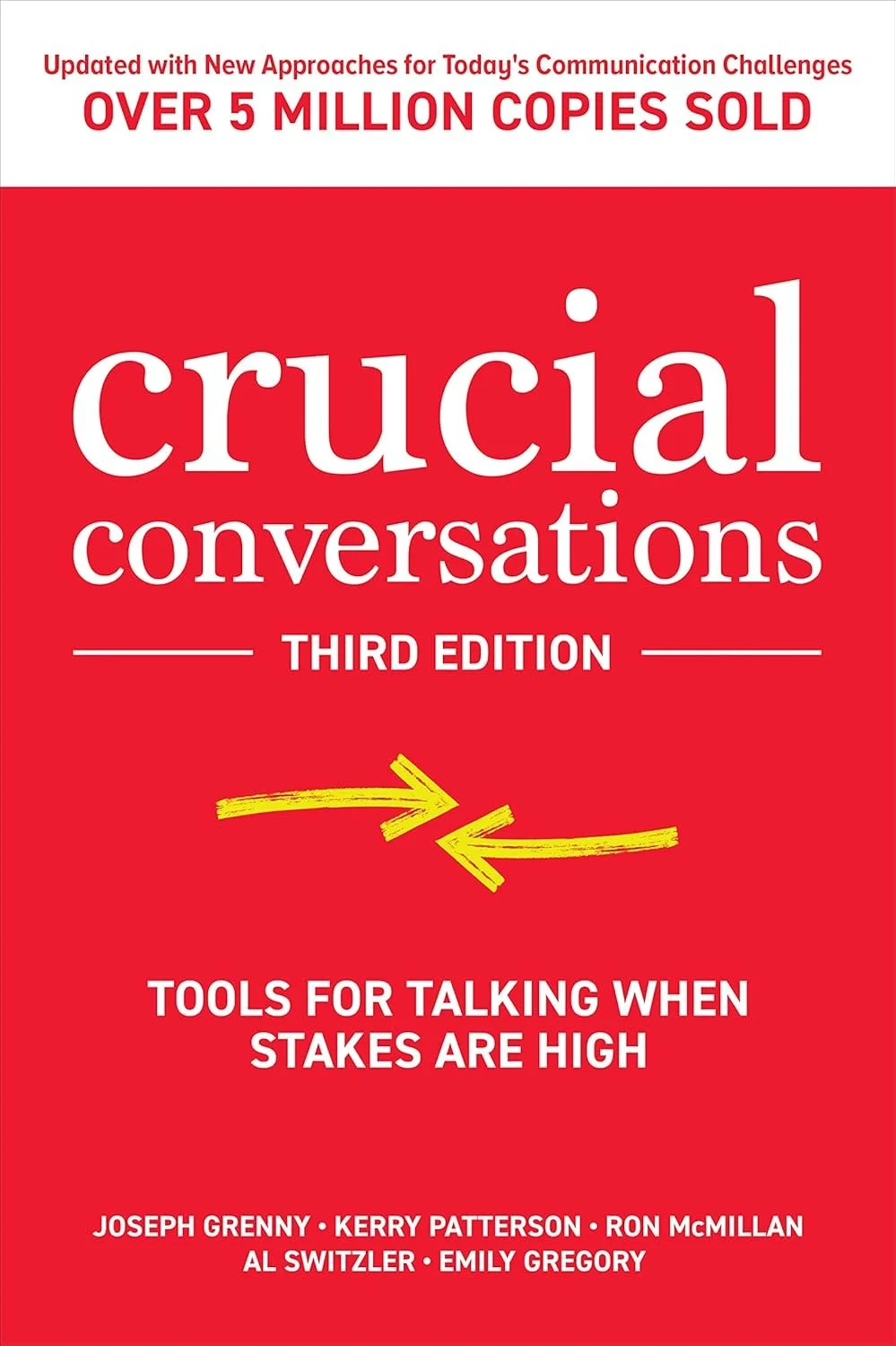
This book is practical, applicable, and important for anyone in a leadership role. In case you do not have time to read the whole book, here are my main takeaways, with a few editorial comments.
A crucial conversation is a discussion between two or more people where the stakes are high, opinions vary, and emotions run strong. Editorial comment: most leaders have several of these every week.
We usually handle crucial conversations one of three ways: we avoid them, we face them and handle them poorly, or we face them and handle them well. The goal, of course, is to learn how to face them well.
The negative feelings we hold in, the emotional pain we carry, and the constant battering we endure through unhealthy conversations can slowly eat away at our health, our relationships, and our organizations.
At the core of every successful conversation is the free flow of relevant information. The book calls this dialogue. Each of us enters conversations with our own opinions, feelings, theories, and experiences. Good dialogue allows those perspectives to be shared rather than hidden, forced, or defended.
Remember that the only person you can directly control is yourself. That sounds simple, but it is one of the hardest lessons in leadership. In a crucial conversation, start by asking what you really want for yourself, for others, and for the relationship. What is the mutual purpose of the conversation?
Wanting to win or seeking revenge is a dialogue-killer.
Stay alert for the moment a conversation turns from routine or harmless into crucial. As you anticipate a tough conversation, pay attention to the fact that you are about to enter the danger zone.
When others start forcing their opinions into the pool of meaning, it is often because they believe you are trying to win rather than have a healthy dialogue. Once they believe that, they may feel the need to do the same.
The instant people perceive disrespect in a conversation, the interaction is no longer about the original purpose. It is now about defending dignity. Editorial comment: no matter what, we need to behave like healthy adults.
When you have made a mistake that has hurt someone, start with an apology. That may be one of the simplest and most powerful pieces of leadership advice in the whole book.
When both parties are trying to force their view, try saying something like this: “I commit to stay in this discussion until we have a solution both of us are comfortable with.” That kind of statement can help move the conversation from winning to solving.
Other people do not make you angry. You create your strong emotions. You either find a way to master them, or you fall hostage to them.
Just after we observe what others do, and just before we feel emotion about it, we tell ourselves a story. We add meaning, motive, and judgment to what we observed. For example: he does not trust me, she thinks I am weak, or they are trying to make me look bad. Then we respond emotionally.
Do not confuse stories with facts. Editorial comment: this point is huge. Has anyone ever said to you, “I know what he’s thinking”? How do they know?
The three most common unhealthy stories are victim stories, villain stories, and helpless stories. Victim stories say, “It is not my fault.” Villain stories say, “It is all your fault.” Helpless stories say, “There is nothing else I can do.”
A helpful leadership question is this: am I pretending not to notice my role in the problem?
Another helpful question is: why would a reasonable, rational, and decent person do this? That question can slow us down and help us become more curious before we become judgmental.
We should make sure we tell our story as a story rather than disguising it as a fact. For example, “I was wondering why...” is often much better than making a hard accusation.
Most arguments consist of battles over the 5 to 10 percent of the facts and stories about which people disagree. That means there may be far more agreement in the room than it first appears.
When a decision needs to be made, decide how to decide. The four methods are command, consult, vote, and consensus. To determine which method to use, ask: Who cares? Who knows? Who must agree? How many people is it worth involving?
Editorial comment: my mentor used to say, “Be careful what you ask for.”
Consult with others when many people will be affected, when you can gather information relatively easily, when people care about the decision, and when there are many options, some of them controversial.
To avoid common decision-making traps, make sure you clarify four things: Who? Does what? By when? How will you follow up?

I would still highly recommend reading the book, unless you live in a cave by yourself and have no contact with other people.
When I reflect on the really great leaders I personally know, I realize they are all experts at effectively handling crucial conversations. That is not an accident. Strong leaders do not avoid the conversations that matter. They learn how to enter them with clarity, humility, courage, and self-control.
For owner-operated businesses, this skill is especially important. The conversations we avoid often become the problems that limit growth, weaken culture, damage customer service, and reduce enterprise value.
Let’s all commit to improving our crucial conversation skills because the conversations you avoid may be the ones holding your business back.